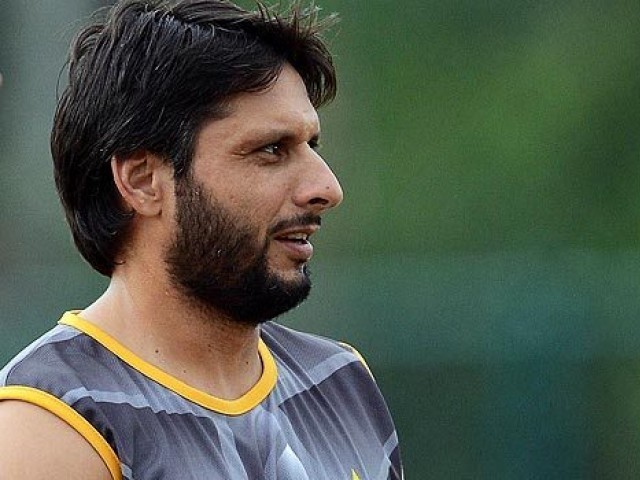
Source (google.com)
Wasim Akram (Urdu: وسیم اکرم)(born June 3, 1966 in Lahore, Punjab) is a former Pakistani cricketer. He was a left-arm fast bowler and left-handed batsman, who represented the Pakistani cricket team in Tests and One-Day Internationals. He is widely regarded as one of the finest fast bowlers ever and holds world records for the most wickets taken in both ODIs (502) and List A cricket (881). Domestic career
Wasim signed for Lancashire in 1988 and went on to become one of their most successful overseas players. From 1988 to 1998, he spearheaded their attack in their NatWest Trophy, Benson & Hedges Cup and Sunday League winning sides. He was a favourite of the local fans who used to sing a song called "Wasim for England" at Lancashire's matches.
International career
Wasim made his Test debut for Pakistani cricket team against New Zealand in early 1985 and in only his second Test he made his presence felt with a ten-wicket haul. Like a few other Pakistani cricketers of his time, he was identified at club level and bypassed first-class domestic competition, entering international cricket directly. A few weeks prior to his selection into the Pakistani team, he was an unknown club cricketer who had failed to even make it to his college team. He was spotted by Javed Miandad, and as a result of his insisting was it that Wasim was given an oppurtunity to play for Pakistan. Later that season he paired with Imran, who became his mentor, at the World Championship of Cricket in Australia.
Wasim's rise in international cricket was rapid during the initial years. When Pakistan toured the West Indies in 1988, he looked to be the quickest bowler between the two sides. However, a serious groin injury impeded his career in the late 1980s. Following two surgeries, he re-emerged in 1990 as a bowler who focused more on swing and control than speed.
One-Day success
Wasim was instrumental in Pakistan's famous World Cup victory in 1992 in Australia. In the final against England his late flurry of an innings, 33 off 19 balls, pushed Pakistan to a respectable 249 for 6. Wasim then took the all-important wicket of Ian Botham early on, and when brought back into the attack later on, with the ball reverse swinging, he produced a devastating spell which led to Allan Lamb and Chris Lewis being clean-bowled in successive deliveries. His excellent performances earned him the Man of the Match award for the final.
He also captained Pakistan with some success. The high points of his captaincy were the 1996-97 victory in the World Series in Australia, two Test match wins in India in 1998-99 and in 1999, when Pakistan reached the World Cup final for the second time. The low point was the 1996 World Cup in Pakistan and India, when he had to pull out of the crucial quarter final match against India. After Pakistan's defeat, there were angry protests outside his homes, and a government inquiry was launched into the failure.
In 1999, he led Pakistan to the brink of victory in the World Cup before they rolled over and gave the final to Australia. This was the start of the match-fixing controversies, as people believed Wasim had set up the match for Australia. He was pardoned by Justice Qayyum.
He was Pakistan's top bowler in the 2003 World Cup taking 19 wickets in 7 matches. However, Pakistan failed to reach the "Super Six" phase of the tournament, and Wasim was one of the eight players to be sacked by the Pakistan Cricket Board as a result.
Wasim was diagnosed with diabetes at the peak of his career, but despite the initial psychological blow, he managed to regain his form and went on to produce fine cricketing displays. Since then he has actively sought to be involved in various awareness-raising campaigns for diabetes.
Playing style
“ Over my 15 or 16 years of playing international cricket in Tests and one-day internationals, Wasim Akram is definitely the most outstanding bowler I've ever faced. ”
— Former West Indies batsman Brian Lara.
An immensely talented player first discovered by Javed Miandad, Wasim played for his college(Govt. Islamia College Civil Lines, Lahore) as an opening bowler and batsman. As a bowler, Wasim possessed genuine pace, accurate control of line and length and seam position, and could swing the ball both in and out. With a very deceptive ball-concealing action, he could bowl equally well from both sides of the wicket. His mastery of reverse swing with the old ball meant he was at his most dangerous towards the end of an innings, and earned him the nickname Sultan of Swing.
As well as often being able to find the edge of the bat, Wasim would also focus his attack on the stumps and had a particularly lethal yorker. Of his 414 Test wickets, 193 were taken caught, 119 were taken LBW and 102 were bowled. In partnership with Waqar Younis, he intimidated international batsmen in the 1990s. Together Wasim and Waqar, known as "the two Ws" of the Pakistani team, were one of the most successful bowling partnerships ever.
Wasim was also skilled with the bat and was regarded as a bowling all-rounder. He was especially effective against spinners. However, he liked to slog and was criticised for his lack of big scores and giving away his wicket too cheaply for a player of his talent. He did silence his critics in October 1996 when he scored 257, not out, of the team's total of 553 against Zimbabwe at Sheikhupura. He also made good scores in difficult times for the Pakistan team such as his 123 against Australia and his 45 not-out to take Pakistan to victory in a low-scoring match. Pakistan, needing six runs in two balls two win the Nehru Cup saw Wasim come out to bat. The first ball he faced was hit out of the ground and secured the cup. Ahmed Bilal was his coach who gave him tricks on reverse swing.
Records
In his Test career, Wasim took 414 wickets in 104 matches, a Pakistani record, at an average of 23.62, and scored 2,898 runs, at an average of 22.64.
In One-Day Internationals, Wasim took a world record 502 wickets in 356 appearances, at an average of 23.52, and scored 3,717 runs, at an average of 16.52.
Wasim was the first bowler in international cricket to take more than 400 wickets in both forms of the game, and only Muttiah Muralitharan has since achieved this.
Wasim also held the record for the most wickets in Cricket World Cups — a total of 55 in 38 matches. Australia's Glenn McGrath broke the record during the 2007 World Cup, ending with a final tally of 71 from 39 matches. On passing Wasim's record, McGrath said, "Wasim Akram, to me, is one of the greatest bowlers of all time. Left-armer, swung it both ways with the new ball and he was so dangerous with the old ball. To go past him is something I will always remember. Probably the other side of the coin is that if you play long enough, you're going to break records here and there."
Uniquely, Wasim took four hat-tricks in international cricket, two each in Tests and ODIs. He is one of only three bowlers to have taken two Test hat-tricks (the others being Hugh Trumble and Jimmy Matthews), and also one of only three bowlers to have taken two ODI hat-tricks (the others being fellow Pakistani Saqlain Mushtaq and Chaminda Vaas of Sri Lanka). Wasim's Test hat-tricks are unique, since they were taken in consecutive Test matches in the same series, against Sri Lanka in 1999. Wasim is also one of only two bowlers to have taken both a Test and ODI hat-trick (the other being fellow Pakistani Mohammad Sami).
Playing in a Test against the West Indies at Lahore in 1990-91, he became one of only six players to have taken four wickets in an over during a Test match. In Wasim's case, the feat was not part of a hat-trick, the third ball of the series being a dropped catch, which allowed a single.
Wasim has also achieved the highest score by a number eight batsman in Test cricket — 257 not out from 363 balls against Zimbabwe at Sheikhupura. The innings contained 12 sixes which is also a world record for Test cricket.
He also has the joint-highest number of Man of the Match awards in Test cricket, along with South African Jacques Kallis, with 17.
Wasim Akram

Wasim Akram
.jpg)
.jpg)
Wasim Akram

Wasim Akram

Wasim Akram
.jpg)
Wasim Akram

Wasim Akram


Wasim Akram

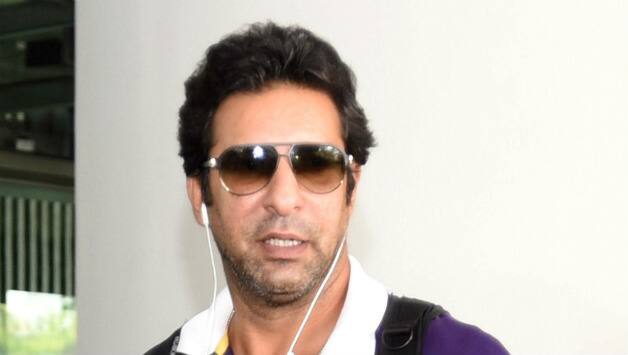
Wasim Akram

Wasim Akram
.jpg)
.jpg)
Wasim Akram